
Serengeti migration guide
Serengeti Calving Season: A Practical Ndutu Safari Guide
The southern plains become one of East Africa’s most compelling wildlife areas when the herds gather to feed and give birth.
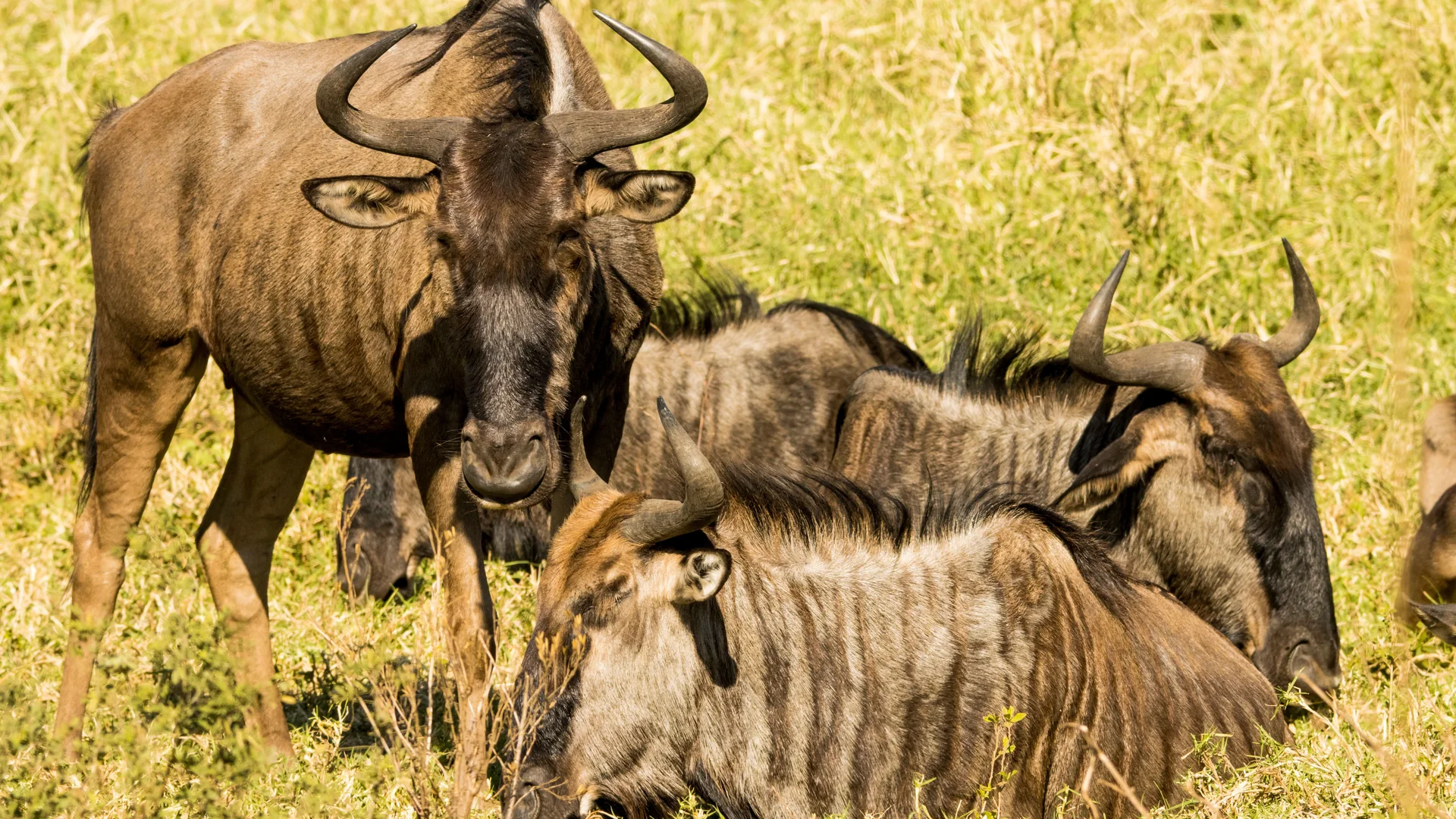
What Makes Calving Season Special
Thousands of calves can be born across a relatively short seasonal window. The abundance of vulnerable young animals attracts lions, cheetahs, hyenas and other predators.
Where Is Ndutu?
Ndutu lies within the broader southern Serengeti–Ngorongoro ecosystem. Mobile and seasonal camps position visitors close to the plains while permanent lodges offer another style of base.
When to Travel
January to March is the usual planning window, with February often associated with peak calving. Rainfall determines grass and herd position, so local updates remain essential.
How to Photograph Responsibly
Use a longer lens, keep voices low and never pressure a guide to crowd animals or block their movement. Patient observation produces better behaviour and stronger photographs.
What to Pack
Bring neutral layers, sun protection, binoculars and weather protection for cameras. Green-season showers can be short and intense, while mornings may feel cool.
Planning note: Wildlife movement changes with rainfall and grass conditions. Treat any migration calendar as guidance, not a guarantee. Source reference: Tanzania Tourism Board — Serengeti National Park.