
Serengeti migration guide
The Great Wildebeest Migration: A Month-by-Month Guide
The migration is a year-round cycle shaped by rain, fresh grass and the needs of more than one species—not a single event on a fixed date.
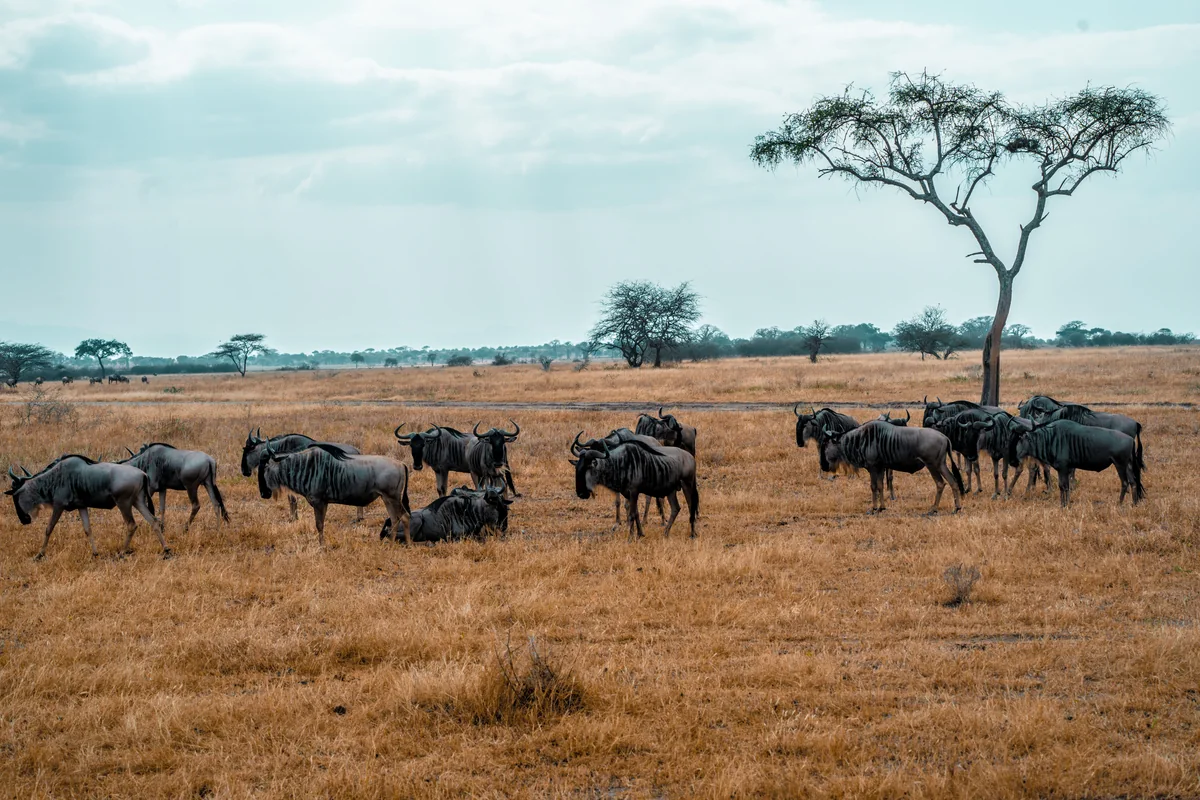
January to March: Southern Plains and Calving
Herds generally gather across the short-grass plains of the southern Serengeti and Ndutu area. Calving is concentrated in this season, bringing abundant newborns and intense predator activity.
April and May: Moving North and West
As the southern plains dry, columns begin moving through central and western Serengeti. Rain can make roads slower, but the landscape is green and dramatic.
June and July: Western Corridor
Many herds reach the western corridor and the Grumeti area. Movement becomes more concentrated as animals continue toward the north.
August to October: Northern Serengeti
Herds often spread across northern Serengeti and the wider Mara ecosystem. River crossings may occur, but they are unpredictable and can never be scheduled precisely.
November and December: Returning South
Short rains encourage movement back through eastern and central Serengeti toward the southern grazing grounds, completing the annual cycle.
Planning note: Wildlife movement changes with rainfall and grass conditions. Treat any migration calendar as guidance, not a guarantee. Source reference: Tanzania Tourism Board — Serengeti National Park.